Definition: |
|---|
The Design factor is the basic value of a ProKon analysis divided by the total value (units total). The total value is the value of all units of an analysis, i.e. the total of the basic value + all assembly interferences. |
For each analysis, the design factor specifies the extent of assembly interferences occurring during a process. If the design factor = 1, there aren't any assembly interferences, because the basic value = total value. This is the theoretical optimum. The design factor is especially helpful for comparing alternatives with identical basic values.
Examples:
Example: |
|---|
2 analyses with different units, but the same design factors (40/160 vs. 80/320): 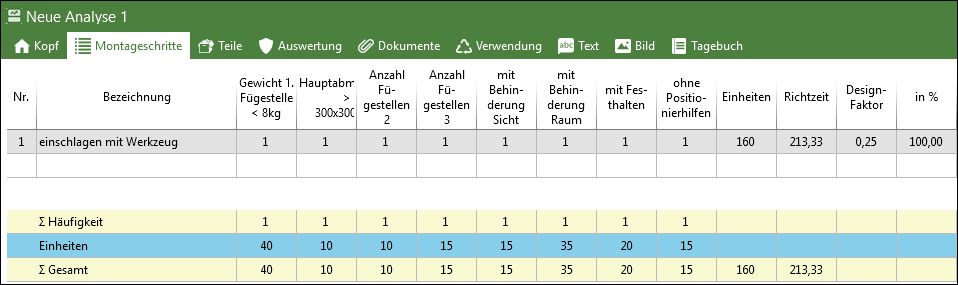 Example: Design factor = 40/160 = 0.25 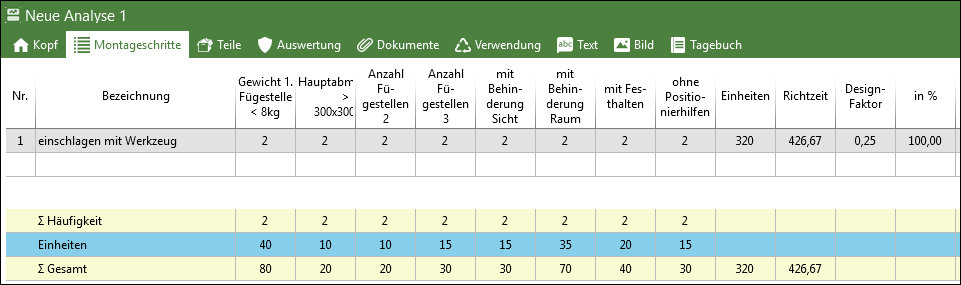 Example: Design factor = 80/320 = 0.25 |
Example: |
|---|
2 analyses with different design factors (40/160 vs. 40/320): Example: Design factor = 40/160 = 0.25 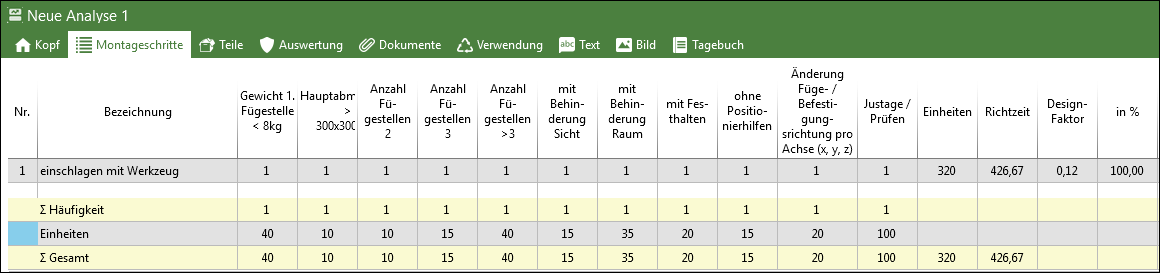 Example: Design factor = 40/320 = 0.12 |